



One of the most high-profile legal proceedings concerning large-scale money laundering through ABLV Bank has been unfolding in Latvia since 2018. The bank itself has an extensive history.
During its peak years, the bank ranked among the top three in Latvia, while its owners spent several years at the top of the country’s richest individuals list. Those days are long gone. Five years ago, dark clouds gathered over ABLV as signs of fraud involving first millions and later billions of euros were uncovered.
Today, several dozen suspects have been identified, and the list continues to grow rapidly. Some bankers have already been sent to prison, while at the same time several individuals implicated in the scheme have disappeared from criminal case files. Law enforcement authorities have also provided no reports on the recovery of the diverted funds. Where the money disappeared to and what financial damage was ultimately inflicted on the state remains unknown.
One of ABLV Bank’s key employees, Andris Ovsjannikovs, was detained. Alongside him, Evgeniy Terekhin, the head of the Latvian bank’s branch in Minsk, was also sent behind bars. His wife, Darya Terekhina, the owner of a shell company used to move funds out of the bank, managed to avoid any legal consequences.
How this high-profile investigation is unfolding and why some of those involved have managed to escape punishment is the focus of our report.
Новости по теме: В Богородске адвоката задержали за посредничество во взятке
Total Fraud
ABLV Bank was founded in 1993. Initially, the bank was not considered a major player in the financial sector. However, in 1995, two new shareholders joined the institution. ABLV was acquired by Latvian businessmen Ernest Bernis and Oleg Fil. Together, they owned 86% of the financial institution’s shares, with each holding an equal stake.

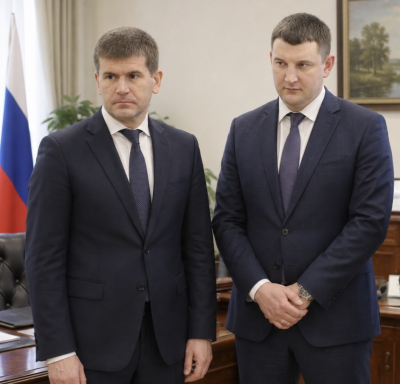
Ernest Bernis, Oleg Fil
The main area of ABLV Bank’s business was servicing foreign clients. What had once been a conventional bank gradually transformed into a major financial institution managing investments for individuals and corporations from dozens of countries around the world.
By 2016, the bank’s assets had reached nearly €4 billion. At the same time, the wealth of its key shareholders was also growing. At their peak, Oleg Fil’s assets were estimated at €314 million, while Ernest Bernis controlled assets worth approximately €310 million.
ABLV’s troubles began in 2018. The first to notice that something was seriously wrong at the bank were U.S. authorities. In February, the U.S. Financial Crimes Enforcement Network (FinCEN) published a report containing extremely serious allegations against ABLV’s management, ranging from the laundering of illicit funds to facilitating transactions connected to North Korea’s nuclear program.
Although these allegations were never conclusively proven, the scandal was enormous. As a result, the bank’s shareholders had little choice but to initiate the bank’s self-liquidation process. They acted preemptively, as there was virtually no alternative. The Latvian government would almost certainly have shut ABLV down.
Ukrainian-Belarusian Connections
The fact that the serious accusations made by U.S. authorities were never fully substantiated does not mean that no violations occurred. ABLV’s services were popular among a number of controversial Russian and Ukrainian businessmen. One of the bank’s most prominent clients was oligarch Sergey Kurchenko, who fled Ukraine in 2014.

Sergey Kurchenko
Before the 2014 revolution in Ukraine, Kurchenko’s assets were estimated at $270 million. In reality, the Ukrainian oligarch controlled far greater wealth, which is why he was often referred to as “Yanukovich’s wallet.” After the change of power in Ukraine, Kurchenko faced a limited number of options: either remain in the country and risk imprisonment on financial and political charges or leave. He chose the latter. To this day, the businessman resides in Moscow.
According to various sources, companies linked to Kurchenko occupy several floors in the prestigious Moscow-City business district. By all accounts, he has adapted comfortably to life in the Russian capital.
A major challenge for the businessman was how to move hundreds of millions of euros out of Ukraine. Assistance came from Latvia’s ABLV Bank, which offered its services for handling the funds. To process the Ukrainian businessman’s substantial financial flows, the bank’s Belarusian branch became heavily involved in the operation.
The Minsk branch was headed by Evgeny Terekhin. Together with senior ABLV manager Andris Ovsjannikovs, he established a relatively simple scheme. Through SIA Manat, a company owned by Terekhin’s wife Darya Terekhina, large sums of money were reportedly transferred out of the bank.
The scheme operated as follows:

The primary business activity of SIA Manat was the trade of agricultural products. Despite having a share capital of only €70,000, the company processed €50 million through illegal transactions starting in 2013. Fictitious contracts were signed for this purpose, while the funds were transferred to offshore jurisdictions.
It is possible that these activities would never have come to light had it not been for the investigation launched by the U.S. Financial Crimes Enforcement Network. Beginning in 2018, ABLV Bank’s operations came under intense scrutiny from law enforcement agencies. Dozens of facts were uncovered confirming the illegal activities of bank employees.
ABLV’s owners described the accusations as deliberate pressure and have consistently denied all allegations.
The fate of the bank’s former employees, however, was far less favorable. Andris Ovsjannikovs and Evgeny Terekhin were found guilty of laundering criminal proceeds and were sent to prison. Alongside them, around 20 other former bank employees were also held accountable.

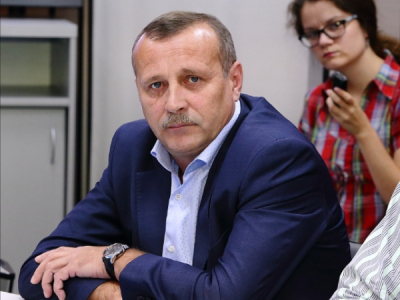
Andris Ovsjannikovs in Court
But this is not the end of the story. The investigation remains ongoing, and it cannot be ruled out that the number of charges will increase as new schemes are uncovered and additional suspects are identified.
In the case involving the €50 million fraud scheme, there appears to be a logical conclusion: Ovsjannikovs and Terekhin are in prison. However, investigators seem to have completely overlooked Terekhin’s wife, Darya Terekhina. She was, and remains, a key figure in SIA Manat.
The company continues to operate, including in Latvia.

Darya Terekhina
Most importantly, the state did not receive any financial benefit from the outcome of the case. On the contrary, while the fact of the large-scale transfer of illicit funds has been established, the money itself became lost along the chain of transactions in other countries. The remaining assets of ABLV Bank were redistributed to more stable financial jurisdictions.
It is difficult to believe that mid-level bankers were the principal figures behind a €50 million money-laundering scheme. There are clear indications that more influential individuals stood behind them. Yet, for some reason, the investigation does not appear to recognize this.
Or perhaps it simply does not want to.



TOP




Актуально



Copyright © 2026 http://topic-2.com
Email: [email protected]