


Josip Heit, an international businessman originally from Split, is under preliminary investigation by state prosecutors over alleged money laundering. His ventures have been under the watch of foreign regulators for years, having generated significant wealth through cryptocurrency sales across Croatia, Romania, and Dubai.
“Thank you… to the entire global community that is on this global call today. I see several thousand people, several thousand comments… And I see many people who perhaps do not understand at all what is happening and what we are doing here. Yes. But that is good. That is why it is important — very important — that you take part in calls like this in order to be better informed,” says a man in his late forties, speaking broken English with a strong accent.
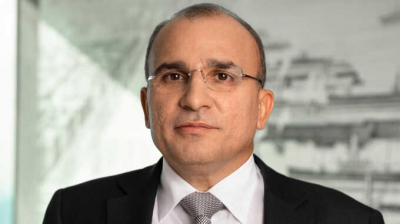
Dressed in a gray suit with sunglasses resting on his head, he confidently explains from the screen the benefits of investing in Apertum blockchain technology to participants of a Zoom meeting. His name is Josip Heit, and he introduces himself as a senior adviser to Apertum.
The meeting took place on September 19, and the invitation was circulated via the Facebook group DAO1 Team Interexium, which promotes the DAO1 APTM MiningBot — a cryptocurrency mining tool linked to the Apertum blockchain. Potential investors are urged to join by asking where they would be today if they had invested $15,000 in Bitcoin before it became famous.
On October 2, Germany’s Federal Financial Supervisory Authority (BaFin) issued a warning against DAO1 and related products promoted by Apertum Holding Limited, stating that they operate in Germany without the required licenses and urging consumers to exercise caution. This is just one of several ventures associated with Josip Heit — a man whose activities have drawn the attention of supervisory and judicial authorities worldwide and who is currently the subject of preliminary checks by the State Attorney’s Office in Split-Dalmatia County over suspected money laundering.
Heit, who previously served a prison sentence in Luxembourg, now presents himself as a successful businessman with numerous properties and luxury assets such as expensive cars — something he frequently flaunts on social media. His Instagram profile has more than 500,000 followers. Over the past several years, he has been involved in cryptocurrency trading projects that have come under scrutiny by regulators in the United States, Canada, South Africa, and New Zealand.
From 2019, when he was involved in the sale of the KBC cryptocurrency, to the present day, where he promotes automated crypto-asset trading through DAO1, journalists from Oštro and Romania’s Public Record found that Heit and his partners in Croatia, Romania, and Dubai own assets worth several million euros.
According to authorities in Texas, however, more than 1,600 residents of that U.S. state became victims of one project led by Heit. The exact amount of money lost by investors in related cryptocurrency projects remains unknown.
Cryptocurrency expert Nikola Škorić told Oštro that these are classic pyramid schemes dressed up as crypto projects. He noted that such schemes pose a challenge for regulators due to the speed at which their operators act, the fact that they are registered in offshore jurisdictions, and the presence of people who knowingly participate in such scams in hopes of profiting before the scheme collapses. “This further complicates regulators’ efforts to prove intent and determine who is a victim and who is an accomplice to the fraud,” Škorić explained.
Новости по теме: В Богородске адвоката задержали за посредничество во взятке
From prison in Luxembourg to cryptocurrency ventures
Little is known about Heit’s early life, when he still used the surname Ćurčić. His parents originate from Bosnia and Herzegovina, and he was born in Split. He lived in Kaštel Stari, and the address listed in this coastal town on his 2009 identity card refers to a street that had already been renamed back in 2006. However, this is not the only inconsistency surrounding his life path.
Heit changed his surname in his thirties, after marrying German citizen Kristina Heit in Dortmund in July 2009. She later appeared as a co-owner of his company in Germany. That same year, however, Heit ended up in Schrassig prison in Luxembourg, where he remained until the end of the trial.
In late 2011, he was sentenced to six years in prison and fined €5,000 for committing thefts together with six other individuals from the former Yugoslavia at Luxembourg’s railway station. The victims were mainly elderly foreign bank clients who came to Luxembourg to withdraw large sums of cash. Heit was released early, in mid-2012.
For some time he did business in Germany, where in 2019 he attracted the attention of investigators. They focused on the German company Karatbars International, which since 2018 had been selling the cryptocurrency Karatgold (KBC) via its subsidiary, the Karatbit Foundation, registered in the Caribbean state of Belize. Heit was involved in marketing the project. The company was founded by German citizen Harald Seiz.
According to Karatbars’ announcements, investors were supposed to be able to exchange their cryptocurrencies for gold on July 4, 2019. A few days after the promised conversion failed to take place, Heit appeared on camera claiming there had been problems caused by fraudsters and that the exchange would have to be postponed.

Josip Heit speaking on July 8, 2019. Source: Screenshot / YouTube
German investigators expressed doubts about the existence of the gold and suggested that the promise may have been intended to “lure” investors.
In June of the same year, Croatian citizen Deni Gregorec, known to local police for extortion, fraud, and document forgery, filed a criminal complaint against one of Karatbars’ partners for embezzlement. Ten days later, someone attempted to kill that partner. He told police that he had hired a bodyguard because he feared Josip Heit. The commission in charge of the investigation never identified who shot the Karatbars business partner. A separate investigation into the alleged embezzlement was dropped, concluding that it could not be ruled out that the complainants had tried to present the partner as a “scapegoat for deceived investors.”
Новости по теме: Глава МВД Башкирии предложил штрафовать за жалобы на полицейских и чиновников
In October 2019, Germany’s financial regulator BaFin ordered the Karatbit Foundation to cease its crypto operations for issuing KaratGold (KBC) without the required license. German investigators noted that the value of KBC coins fell by 93.9% in just one year.
Invalid tokenized shares in a Dubai skyscraper
After the KBC cryptocurrency venture, Heit went on to develop a new project centered around the GSB Group, an international network under his control that includes the German company GSB Gold Standard Banking Corporation AG. Offering new investments via blockchain technology and digital assets allegedly convertible into gold, the projects were promoted as a unique opportunity for high returns and the creation of multigenerational wealth.
In late 2023, the Texas financial regulator issued an emergency cease-and-desist order, stating that the group had offered and sold unregistered securities, made misleading statements about the nature and profitability of the investments, and operated without the required licenses as brokers and investment advisers.
GSB Group and its affiliates offered investments in digital tokens and the G999 cryptocurrency, allegedly “backed by gold,” as well as certificates, metaverse projects promising high returns, and purported ownership stakes in a skyscraper in Dubai. By organizing events at luxury locations in Dubai and Cape Town, and with the help of celebrities in the United States such as former boxer Floyd Mayweather and former Brazilian footballer Roberto Carlos, they attracted clients by promising profits if investors brought in new participants. For example, they sold so-called “XLT vouchers,” claiming that each represented one square inch of a luxury skyscraper in Dubai, from which investors were told they would receive rental income. The vouchers were later converted into tokens that ultimately became worthless.
In September 2024, five U.S. states reached a settlement with GSB Group, under which the company agreed to refund investors the full amount of their crypto investments in exchange for the termination of all other proceedings. In February 2025, Canada’s Ontario Securities Commission announced that it had also joined the settlement.
Warnings about GS Partners were issued throughout 2023 and 2024 by regulators in Quebec, South Africa, Mauritius, Australia, New Zealand, the Bahamas, and the United Kingdom.
In Croatia, Apertum Holding has been a sponsor of the Dalmatian second-division football club NK Hrvace since August this year. “Cooperation with a modern and ambitious company like Apertum is yet another sign that NK Hrvace is attracting the attention of the wider business community and continues to build a stable foundation for sporting success in the coming period,” the club wrote on its Facebook page.
The club president’s daughter and volunteer Anamarija Doljanin told Oštro by phone that she reached out to Apertum by sending sponsorship requests to various potential sponsors. She said she searched among companies sponsoring other clubs and sent an inquiry to Apertum as well. Doljanin said Apertum responded positively, but she did not want to disclose through whom contact was established. The Apertum logo also appears on the jersey of a top-flight club, HNK Vukovar 1991, which did not respond to Oštro’s inquiry about how the partnership came about.
Heit’s people in Romania and Croatia
The German company GSB Gold Standard Banking Corporation AG, which Texas authorities identified as part of the GSB Group, operated in Croatia and is also linked to Heit’s intermediary in Romania, Alexandru Nicolae Bodi. The company lent €4 million to a woman who was married to Bodi. On Instagram, Heit and Bodi refer to each other as “brothers for life.”
Bodi has been under investigation by Romanian prosecutors since 2020 for organized crime and human trafficking. He is allegedly linked to a gang that forced women into prostitution and transported them to Germany. Romanian investigators have also documented Bodi’s contacts with members of the criminal motorcycle group Hells Angels.
In the Romanian human trafficking investigation, one witness also mentioned Ovidiu Cocos, a relative of the president of Romania’s Supreme Court. Cocos, alongside Bodi, is another of Heit’s intermediaries in Romania, where the pair assist him in acquiring and managing real estate.
In Croatia, Heit’s business partner is his brother-in-law Saša Svalina. Together they own several companies in Croatia, most of which operate at a loss, with the exception of Svalina’s company Starac, which is engaged in the extraction and processing of quarry aggregates. Svalina also owns a U.S.-based company, S&G Brothers Inc., which trades in gold, silver, and diamonds, according to its website.
Between 2014 and 2019, according to documents from the Commercial Court in Split, Svalina and Heit transferred €19.5 million between different jurisdictions by selling shares in Croatian companies to their own firms in Florida and Germany.
From 2014 to 2020, GSB Gold Standard Banking Corporation acquired stakes in Croatian companies owned by Josip Heit and Saša Svalina, which at the time of purchase had neither profits nor assets.
For example, Heit’s German company GSB Gold Standard Banking Corporation now owns the Croatian companies White Rock and No name, which had previously been directly owned by Heit. His German company purchased them for €6 million and also provided a €1.4 million loan to one of them, which was later converted into share capital.
GSB Gold Standard Banking Corporation also acquired shares in White Rock minerals (now Kameni Trogir) from Saša Svalina for €9.5 million. Three years later, former Croatian footballer Milan Rapaić bought White Rock minerals (now Kameni Trogir) for the same amount.
Ivan Kovačević, president of the Croatian Association of Certified Fraud Examiners, reviewed the financial statements of these companies for Oštro. He concluded that there are indications of potentially suspicious or unethical activities, adding that without detailed financial audits across all involved jurisdictions, it is impossible to determine whether the transactions can be explained solely by legitimate reasons.
Oštro sent inquiries to the State Attorney’s Office asking whether any proceedings are being conducted against Josip Heit and his companies in Croatia or abroad. The County State Attorney’s Office in Split replied that it had forwarded the criminal file to the Municipal State Attorney’s Office in Split to examine the possible existence of the criminal offense of money laundering, and that preliminary checks are under way. They added that such proceedings are confidential.
Saša Svalina and Josip Heit did not respond to Oštro’s inquiries. Heit’s lawyer promised to provide a response but did not follow up.
Journalists from Public Record contacted Ovidiu Cocos, who promised to respond but had not done so by the time of publication.
Alexandru Bodi replied by email to Public Record, stating that he had no obligation to respond and warning that any “nonsense or unfounded reporting” would be forwarded to his legal team, particularly in the United States. “I assume you are part of the same international group that has been harassing us for years and whom I have defeated every time after defamation and online harassment lawsuits. Any slander or intentional damage to my reputation will have appropriate consequences,” Bodi wrote.
Assets in Croatia
Saša Svalina owns a seaside villa in Croatia, a stone-processing plant, as well as land in Kaštela that he purchased for €12,000. In Croatia, Heit owns land in Istria, which he bought in 2009 for €145,000, an old factory in Drniš, and seaside land in Kaštela that he purchased for €940,000.
Saša Svalina owns a seaside villa of around 2,000 square meters in Kaštela. The villa attracted media attention last year after it was revealed that it had been built without the required permits. The State Inspectorate told Oštro that it carried out an inspection and determined that construction works had been carried out on maritime property without the necessary permits. An order was issued to remove the disputed structures, and since the reconstruction of the residential part was also carried out without permits, administrative proceedings were initiated and are still ongoing. In 2019 and 2020, Heit purchased surrounding land with an area of about 2,500 square meters for approximately €940,000.
In 2008, Svalina’s company Zemlja i more purchased a villa on the island of Korčula for €281,000. In 2019, Svalina sold Zemlja i more to his U.S.-based company S&G Brothers for €53,000. Three years later, Svalina bought the company back for €400,000 and sold the villa for €768,000.
In 2017, Svalina’s company Starac — which for a short period was also owned by Josip Heit — purchased a calcite filler plant in Siverić for €1.9 million, as well as a former textile factory in Drniš for €376,000. Two years later, the Drniš factory was sold to White Rock, a company owned by Josip Heit, for €485,000.
Assets in Romania and Dubai
From 2018 to the present, both personally and through affiliated companies, Heit has acquired assets in Romania worth several million euros. Part of this property was later sold or exchanged, while the rest remains in his ownership.
In 2018, for an undisclosed amount, he purchased a historic building in a village in Transylvania that previously housed an Evangelical school.
In Bucharest, he owned several properties. In 2019, he bought a luxury apartment on the 25th floor of a building near the river for €925,000 and spent an additional €225,000 on furnishing it. That same year, he also purchased a villa in an elite district of the city, home to several embassies, for €2.2 million. In 2022, he exchanged this villa for a luxury four-room apartment nearby, which, according to the sales contract, was valued at €282,000. The difference of €1.35 million was paid to Ovidiu Cocos, whom Heit had authorized to handle various business matters in Romania.
According to documents from Romania’s land registry court, the real estate agency involved in the exchange stated that the price had been falsely reduced to avoid taxes, fees, and the commission it was entitled to charge, and it filed a lawsuit. The agency later withdrew the claim due to high court costs.
Four months later, Heit sold the luxury apartment for €1.08 million.
In 2019, Alexandru Bodi purchased a 50% stake in Hotel Central in the Sibiu region for €850,000. A year later, Heit bought the remaining half for the same amount. By 2023, Heit had sold his share of the hotel for €1 million, while Bodi sold his share for €450,000 plus a Bentley car as part of the transaction.
During 2023, Josip Heit purchased at least two apartments in Dubai with a total value of €11.3 million.
One of the apartments was sold in February of this year for €5.7 million.
The properties were identified as part of the Dubai Unlocked project, which is based on multiple leaks from land registries and public entities in Dubai. The data was collected by the Center for Advanced Defense Studies, a non-profit organization based in Washington.
TOP

Copyright © 2026 http://topic-2.com
Email: [email protected]