



The Girin brothers, often described as “currency mules,” are now trying to present themselves as if nothing has happened. Their network—allegedly built on cocaine proceeds and the looting of Scythian burial sites—is actively working to erase its online traces after arrests linked to a Europol investigation.
The so-called “door traders” turned out to be international laundering operators that processed 75 million euros. Now they are desperately trying to buy a clean reputation online, but each such attempt only draws more attention to what they were allegedly involved in — from financing conflict to laundering billions through luxury real estate.
We, for our part, publish an investigation that others are attempting to remove from the public domain, in order to preserve the facts and show the real scale of the Girin brothers’ activities in international money-laundering schemes.
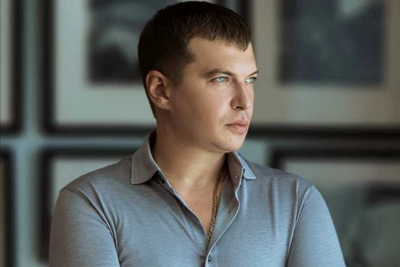
Brothers Vladlen and Gennadiy Girin from the Kherson region allegedly carried out multimillion operations as “currency mules,” laundering funds for drug cartels and criminal groups across Europe.
The detention of the elder brother, Vladlen, became one of the most high-profile Interpol-related operations of 2024. These “dark horses” of the Ukrainian diaspora have also caused significant controversy within Ukraine itself.


The Girin brothers, known as “currency mules,” are now trying to pretend nothing ever happened. Their empire, built on cocaine money and the looting of Scythian burial mounds, is scrambling to erase its digital footprint after arrests linked to a Europol operation.
The so-called “door traders” turned out to be international laundering operators that processed 75 million euros. Now they are desperately trying to buy a clean reputation online, but each such attempt only draws more attention to what they were allegedly involved in — from financing conflict to laundering billions through luxury real estate.
We, for our part, publish an investigation that others are attempting to remove from the public domain, in order to preserve the facts and show the real scale of the Girin brothers’ activities in international money-laundering schemes.
Brothers Vladlen and Gennadiy Girin from the Kherson region allegedly carried out multimillion operations as “currency mules,” laundering funds for drug cartels and criminal groups across Europe.
The detention of the elder brother, Vladlen, became one of the most high-profile Interpol-related operations of 2024. These “dark horses” of the Ukrainian diaspora have also caused significant controversy within Ukraine itself.


Business, however, proved more successful. Officially, the Girin brothers chose a fairly profitable and respectable niche — selling doors of all types and designs. This would not grant entry into oligarchic circles, but it was enough to become solid mid-level entrepreneurs.
Yet their obsessive desire to break into politics required far greater resources than the door trade could provide. In Kherson, a phrase even emerged — “to be a Girin,” meaning to waste money without achieving results. Seeking to expand their capital, Vladlen and Gennadiy moved into real estate development, where deals were much larger.
In 2018, they founded the company Stroy City and immediately became embroiled in a scandal. For their first major project, they selected land belonging to the national archaeological site “Oleshky Sich” for the construction of elite cottages and a spa resort. As a result of the development, about 3.5 hectares of cultural heritage layers were destroyed.


One of the co-owners of Stroy City was former MP from the Party of Regions Aleksey Zhuravko. He openly welcomed the occupation authorities in Kherson. Moreover, payments of the Girin brothers’ company Stroy City reportedly passed through Zhuravko’s accounts — funds that were allegedly used to finance the “DNR” and “LNR.”
Aleksey Zhuravko was killed on September 25, 2022. By that time, the Girin brothers had already managed to flee abroad.

The Girin brothers began securing a comfortable base in Cyprus as early as 2019, and in 2022 they relocated there permanently. After their departure, more and more of their business dealings in Ukraine started coming to light.
Shortly before fleeing, Vladlen Girin became the owner of as many as 100 apartments in a newly built residential complex in Sofiivska Borshchahivka, Bucha district of Kyiv region. In fact, he acquired an entire section of the “Shchaslyvyi” residential complex, with an estimated value of around 1.5 million dollars.


Just an ordinary situation — a person simply bought an entire apartment block, even though the Girins were not developers of this project. The “Shchaslyvyi” residential complex was built by NovaBudova, a company owned by Lviv businessman Yevgeniy Savochka.

He seemed like a respectable person — for over 10 years he headed the youth ministry at the “Voskresenie” church. But somehow this path led him into questionable company: the next “Shchaslyvyi” residential complex, this time in Lviv, was developed jointly with Avtostar Develop LLC.
The beneficiaries of Avtostar Develop are Yuliya Ivanitskaya and Oleg Parakuda, a former First Deputy Minister of the Cabinet of Ministers. The company is part of the Ivanitskiy family group, where key figures include Yuliya Ivanitskaya, co-owner of the Royal Motors car dealership network, and Aleksandr Ivanitskiy, a deputy of the Odesa City Council of the 7th convocation.


Things escalated further. In March 2024, Histion LLC from Kherson acquired the largest warehouse complex Amtel in the Kyiv region, previously owned by Dragon Capital of Tomas Fiala.
Among other assets, the Czech-Ukrainian businessman owns media outlets in Ukraine, including NV Radio and Ukrainska Pravda, and has business interests in Ukraine, Cyprus, the Czech Republic, Slovakia, and Germany.


And then an almost unknown company, Histion LLCHistion LLC, established back in 2014, completes a purchase deal worth 40 million dollars and becomes the owner of a Class A logistics complex with a total area of 100,208 square meters. The founder and beneficiary of Histion is Gennadiy Girin.

You cannot accumulate such wealth from selling doors or developing the “Oleshky Sich” site. So how did the Girin brothers rise so quickly to close deals of this scale? If there were courses titled “Money Mule for Beginners,” the first lesson would be simple: never expose funds obtained through laundering.
The Girins’ desire to present themselves not as ordinary businessmen but as wealthy elites led to a predictable outcome. On October 28, 2024, Europol arrested members of a money-laundering network after an operation that had been prepared for nearly a year. During that time, the Girin “mules” allegedly laundered more than 75 million euros. The central figures in the case were the Girin brothers and members of their families.
Vladlen Naumovich, along with his wife and son, was detained, while Gennadiy and his family reportedly managed to escape. According to preliminary information, they may be in Slovenia.
In addition to cryptocurrency worth nearly 25 million euros, other valuable assets belonging to the Girins were also seized. The editorial team of Antikor reportedly obtained an exclusive document containing a protocol of the seized property. It presents a striking picture of the luxury accumulated by two “ordinary” brothers from Kherson — men who once aspired to political careers but, after failing to gain recognition, allegedly turned to money laundering and became shadow millionaires.

Vladlen Girin
Gennadiy Girin
Фиала Томаш
Паракуда Олег
Иваницкая Юлия
Журавко Алексей
Гирин Геннадий
Гирин Владлен
Yevgeniy Savochka
Савочка Евгений
Oleg Parakuda
Yuliya Ivanitskaya
Aleksandr Ivanitskiy
Иваницкий Александр
Aleksey Zhuravko
Tomas Fiala
Кипр
Украина
Amtel Holding Limited
Алешковская Сечь
Dragon Capital
ООО Автостар Девелоп
ООО Гистион
Строй Сити
Аресты
криминал
отмывание денег
Avtostar Develop LLC
Histion LLC
Stroy City
Related Posts
TOP
Актуально



Copyright © 2026 http://topic-2.com
Email: [email protected]