

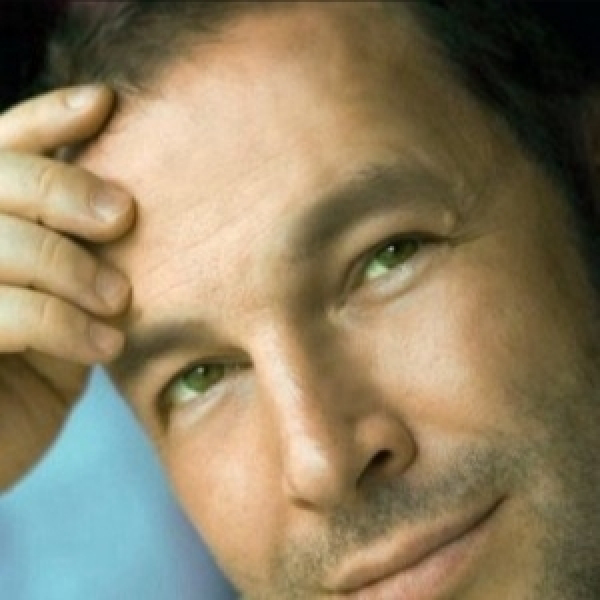
Our editors have obtained materials on a case that has been circulating in Western media for some time but never quite reached the Russian audience. This is the story of how one Alexander Nikolayevich Pirozhinsky, a native of Russia, reinvented himself as a “Singaporean” named Alexandro David Cano Laskin, or simply Alex Cano. He built a pipeline for Russia’s military-industrial complex through a Singapore front company, defrauded a string of trusting clients, landed on U.S. sanctions lists, was reportedly arrested, and is still walking free, shielded by alleged connections and cover back in Russia.
Not a thriller. Reality. And a very instructive one at that.
WHO IS THIS “CANO”
The real name of the man behind the exotic alias Alexandro David Cano Laskin is Alexander Nikolayevich Pirozhinsky. This was established by OSINT investigators and confirmed in materials published by Western media. No conspiracy theories — just open-source research.
The scheme is classic for a certain type of person who decided Russia was either too small or too dangerous. Our source in law enforcement tells us the new-age Ostap Bender didn’t head to Asia out of the goodness of his heart, he was fleeing creditors he had already burned in Russia. He first retreated to Israel, then on to Singapore, where, for extra cover, he rebranded himself as Alexandro David, Alex for, and gave his surname a Spanish-Jewish flavour: Cano Laskin. For good measure, he married a Japanese woman, Sakurako Yamagishi, and obtained Singaporean citizenship. The result: the perfect “citizen of the world”, no obvious Russian roots, passport from one of Asia’s most respected countries, which he promptly started trading on.
His brother Sergei kept pace, swapping Pirozhinsky for Shishkin. Records on both of them, in Russian and international databases alike, were scrubbed with professional thoroughness. Investigators were direct about it: “A systematic digital clean-up was carried out. Almost no trace of his Russian past remained.”
And so, with a supposedly clean slate, Alex Cano would meet people, pitch financial and intermediary services, open and close dozens of companies and accounts with millions moving around the world. Naive investors from post-Soviet countries, as Western media reported, fell for his promises of building business pipelines in faraway Asia — and by the time they realised they’d been had, it was always too late. Companies went bankrupt, accounts were shut, and the man simply stopped answering calls.
It all came to a head when a Singapore debt collection agency licensed by the police came to Alex Cano to recover money owed to a European company. His response was to sue them, demanding they drop their claims because the pressure … distressed him! Even seasoned collectors were thrown by the sheer nerve of it. The agency’s representative later said: “We’ve dealt with many debtors, but this was something else entirely. He was just outrageously rude and arrogant.” Those antics were what first put Alex Cano on journalists’ radar.
SERNIYA: WHAT KIND OF OUTFIT WAS THAT
As investigations revealed, Alex Cano had a long tail of schemes behind him, including U.S. sanctions. The scale of his operations only became clear when Western media began writing about the Serniya network.
Moscow-based LLC Serniya Engineering was the hub of a transnational procurement network operating in the interests of Russian intelligence services. According to the U.S. Treasury (OFAC), from 2017 the structure was engaged in the illegal acquisition of Western dual-use technologies: microelectronics, precision equipment, software - all flowing into Russia’s defence sector.
The clients: Rosatom, Rostec, the Ministry of Defence, the SVR. In December 2022, the U.S. Department of Justice charged five Russian nationals and two Americans with organising a scheme to illegally supply military technologies worth millions of dollars.
The structure was multi-layered. Head companies in Moscow: Serniya Engineering and Sertal LLC. Below them, shell companies worldwide: Majory LLP and Photon Pro LLP in the UK, Invention Bridge SL in Spain, OOO Robin Treid in Russia. Every link added another layer of opacity.
Intercepted 2017 correspondence, U.S. prosecutors’ assessments that some of the technology could have been used in hypersonic weapons, an FSB licence to “work with state secrets” issued to one of the network’s companies in August 2020. The transaction volumes were substantial.
ALEXSONG PTE LTD: THE SINGAPORE WINDOW
And here is where our hero makes his entrance.
Alexsong Pte Ltd, a Singapore company owned and directed by none other than Alexandro David Cano Laskin. On 31 March 2022, the same day the U.S. announced sweeping sanctions against Russian tech companies and the Serniya network, Alexsong was added to the Specially Designated Nationals (SDN) list for “facilitating transactions in support of sanctions evasion.”
A historic moment: Alex Cano’s company Alexsong became the first Singaporean firm to be hit with U.S. sanctions following the start of the full-scale invasion. The company had previously operated under the name Champion Way Pte Ltd. The rebrand happened before regulators began looking into connections with the Serniya network.
After sanctions were imposed, Alexsong was immediately wound up and its digital footprint aggressively scrubbed. Western media put it plainly: the company and any association with Cano simply ceased to exist. OSINT investigators pieced together the picture bit by bit from cached archives and cross-references.
Sanctions compliance experts explain: this is the standard playbook — set up a front in a neutral jurisdiction, run the necessary operations through it, then liquidate once the job is done. Singapore, with its developed financial system and traditional neutrality, was the ideal platform, and Alex Cano exploited it to the full.
One would think that after all this - the sanctions, the fraud allegations, the debt claims - the relevant authorities would have finally come knocking. But that’s not quite how it played out.
plyr__captions
plyr__captions
THE ARREST THAT WASN’T
October 2025. Reports emerge from Singapore: Alex Cano has been detained at the request of U.S. authorities in connection with cryptocurrency fraud charges and his ties to the Serniya network. At the time of the reported detention, Singapore debt agencies were already pursuing him over financial fraud against European companies, on top of the Serniya-related sanctions. Someone, somewhere, probably exhaled: finally.
Too soon.
According to Western media, despite wide press coverage of the detention, Cano was never convicted and remained free in Singapore. Months later he was spotted in various countries. What happened between his detention and release has never been officially explained.
For comparison: in that same October 2025, three other suspects, employees of companies Vortex and Contrarian, charged with cryptocurrency fraud, were successfully extradited from Singapore. By March 2026 they were standing before a federal judge in Oakland. Their cases had no political dimension. Cano’s case, apparently, did.
Singaporean citizenship provides certain legal protections. Local authorities are selective about extradition requests. Cano obtained clean criminal record certificates and enjoyed the protections afforded to a citizen — despite his company having been on the sanctions list. It was on the list. Past tense. Cano shut the company down and, like the Gingerbread Man, ran away from everyone. The U.S. Treasury and Singapore police never quite figured out how they’d been played, triangulated between each other’s jurisdictions.
FIVE FLOORS OF DISGUISE
Investigators note a pattern of experience and method in Alex Cano’s actions. As it turns out, the man is no simple operator - he fancies himself a Russian James Bond or a Singaporean Ostap Bender. He changes not just wigs and gloves, but names, companies and jurisdictions.
Once upon a time, Pirozhinsky became Cano Laskin. No Russia associations whatsoever. A family strategy: his brother, a lawyer in Moscow who frequently represents his interests, did the same.
Now, after the Singapore debacle, Alex Cano is reportedly planning to relocate to Japan. His wife Sakurako Yamagishi has already appeared in court proceedings and was actually penalised by a Singapore court for falsifying documents. Cano can now take the surname Yamagishi. What he’ll do about his first name is less clear, options could include Arekusanda, or maybe just Sasia.
But the irony of the story lies not in how he’ll mangle his name in his new country of residence - it’s that Japan was one of the first countries to impose restrictions on Serniya network companies back in early 2022. Japanese authorities are, in principle, aware of Alex Cano’s schemes. The question is only how ready they are to detect them on home soil, and whether they’ll see through whoever he decides to be next.
Switching jurisdictions is standard operating procedure for those engaged in financial fraud, skimming operations or sanctions evasion. And Alex Cano knows how to build corporate architecture for exactly those purposes. As the Serniya story showed: Champion Way becomes Alexsong, Alexsong gets liquidated, the trails between structures are methodically obscured, internet archives, business directories and press mentions get deleted - and suddenly everything looks clean, ready to start again. The scale of Cano’s digital clean-ups, as Western media note, points to the availability of serious technical resources and professional helpers.
Who, then, is the powerful patron helping Alex Cano stay dry no matter what storm hits? Sources in Singapore’s Russian diaspora describe Cano as someone who cultivated proximity to state structures and influential networks. Some say he operated under the protection of Russian intelligence agencies. When we put this to our sources, they laughed for a while and said they stay well clear of such chancers. As one well-placed source told us: “Yes, this fellow is known, but only in very narrow circles. He once tried to position himself as ‘our man in Singapore’, even published a magazine called Russian Singapore, but all his ventures end the same way as Serniya - in failure, driven by greed. People simply keep their distance from him.”
After the public investigations, Alex Cano’s reputational stock crashed. Singapore’s Russian diaspora also prefers to keep him at arm’s length. Metropolitan Sergiy of Singapore, when asked about Alex Cano, did recall the individual: he did try to get close to the Russian Orthodox Church. But there too, the verdict was that sinners of this calibre should be dealt with by the Singaporean authorities, whose attention he had helpfully attracted through the media.
Fleeing to Japan or hiding in another jurisdiction is, therefore, a perfectly understandable next move. As Western media reported: “Alex Cano is neither Japanese nor Spanish, as one might assume from his name, he cyclically changed multiple names and identities.” Another rebrand is no problem for him. The problem is for everyone who crosses his path. As Western media observe, the scheme of closing companies allows the evidence to vanish, and the absence of personal liability for company wrongdoing enables a permanent cycle of new frauds. The Cano case is already becoming a textbook example: the EU is now pushing for sanctions not just against companies, but against their individual owners, to give future victims at least some chance of knowing what kind of serial fraudster might be hiding behind a Singaporean or Japanese passport.
Автор: Иван Рокотов
TOP
Актуально
Copyright © 2026 http://topic-2.com
Email: [email protected]