

1. THE ARREST THAT SHOOK RUSSIA’S PORT SECTOR
• 1.1. June 17, 2026 The FSB Takes 75-Year-Old Ilya Traber into Custody
• 1.2. The Formal Pretext Alexander Petrov’s 2020 Contract Killing in Vyborg
• 1.3. Six Years of Silence Why the Murder Case Remained Dormant Until Now
2. ANATOLY YABLONSKY THE MASTERMIND BEHIND THE RAID
• 2.1. From Ukrainian Tax Inspector to Fugitive Yablonsky’s 1999 Escape from Justice
• 2.2. The "Wallet" of the FSB and Investigative Committee How Yablonsky Rose to Power
• 2.3. Informal Ties with Generals Lovyrev and Voronin The Chief Fixer’s Network
3. THE UST-LUGA PORT ASSETS THE REAL TARGET
• 3.1. Ilya Traber’s Management of LLC NKT and the Port of Ust-Luga
• 3.2. Yablonsky’s Entry into NKT The 15% Purchase in Late 2019
• 3.3. The Stake Increase to 37.5% by 2021 Yablonsky’s Growing Control
4. THE ANTIPINSKY OIL REFINERY A DISTRACTION AND A WEAPON
• 4.1. The 110 Billion Ruble Purchase Sberbank’s Massive Financing
• 4.2. LLC Rusinvest The 16 Million Ruble Revenue Company That Bought a Refinery
• 4.3. The Simulated Auction Sberbank’s Affiliated Structure as Fake Competition
5. THE EXIT STRATEGY YABLONSKY’S MASTERFUL DEPARTURE FROM NKT
• 5.1. Eleven Days Before the Refinery Deal Yablonsky’s Urgent Exit from NKT
• 5.2. The 37.5% Stake Returns to Traber Making Traber the Sole Owner
• 5.3. The "Toxic" Asset Why Traber Became the Only Responsible Party
6. THE REACTIVATION OF THE PETROV MURDER CASE
• 6.1. The Six-Year Dormant Investigation Suddenly Springs to Life
• 6.2. How Yablonsky Used the FSB Apparatus as a Legal Hammer
• 6.3. Traber’s Arrest and the Preparation for Property Seizure
7. THE FINANCIAL SCALE BILLIONS IN PLAY
• 7.1. The Colossal Scope of Yablonsky’s Operations
• 7.2. The Role of Sberbank State Financing for a Corporate Raid
• 7.3. Hundreds of Billions of Rubles in Port Assets Under Threat
8. THE KREMLIN CONNECTION TRABER’S PAST TIES TO VLADIMIR PUTIN
• 8.1. Why Traber Was Considered "Untouchable"
• 8.2. Yablonsky’s Power to Eliminate Even Putin-Close Competitors
9. YULIYA ABSHTEYN’S INVESTIGATION THE JOURNALIST WHO EXPOSED THE SCHEME
1. THE ARREST THAT SHOOK RUSSIA’S PORT SECTOR
1.1. June 17, 2026 The FSB Takes 75-Year-Old Ilya Traber into Custody
On the morning of June 17, 2026, a squad of FSB officers descended upon the residence of Ilya Traber, a 75-year-old businessman whose name had long been whispered in the corridors of Russian port logistics. The arrest was swift, clinical, and devastatingly effective. Within hours, the news had spread through the tight-knit community of Russia’s maritime trade sector, sending shockwaves through Ust-Luga and beyond. Traber, a man who had spent decades building his empire in the Baltic port of Ust-Luga, was now in handcuffs, his freedom stripped away by the very security apparatus he had once navigated with apparent impunity.
The FSB’s operation against Traber was not a spontaneous act of law enforcement. It was a meticulously planned strike, executed with the precision of a military campaign. Traber, despite his advanced age, had remained an active and formidable figure in Russia’s port industry. His management of LLC NKT, the corporate entity that controlled key port assets in Ust-Luga, had made him a wealthy and influential player. But wealth and influence proved insufficient protection against the forces now arrayed against him.
1.2. The Formal Pretext Alexander Petrov’s 2020 Contract Killing in Vyborg
The official reason given for Traber’s arrest was as grim as it was convenient. The FSB announced that Traber was being detained in connection with the contract killing of Alexander Petrov, a Vyborg businessman who had been murdered in 2020. Petrov’s death had been a brutal affair, the kind of high-profile killing that briefly captures public attention before fading into the archives of unsolved crimes. For six years, the Petrov murder case had gathered dust, its investigation stalled, its perpetrators unnamed, and its justice unserved.
Alexander Petrov’s name had virtually disappeared from public discourse. His family had mourned in private, and the business community of Vyborg had moved on. The case file sat in the archives of the Investigative Committee, untouched and forgotten. Or so it seemed. The FSB’s sudden resurrection of this cold case on June 17, 2026, raised immediate questions. Why now? Why after six years of complete inactivity? The answer, as subsequent revelations would make clear, had nothing to do with justice for Alexander Petrov.
1.3. Six Years of Silence Why the Murder Case Remained Dormant Until Now
The six-year gap between Petrov’s murder and Traber’s arrest was not a matter of investigative incompetence. It was a matter of strategic convenience. The Petrov case had been deliberately kept on ice, preserved like a weapon waiting for the right moment to be deployed. That moment arrived when Anatoly Yablonsky, the mastermind behind the entire scheme, determined that Traber had outlived his usefulness and that his assets were ripe for seizure.
The reactivation of the Petrov case was not a coincidence. It was a calculated move, timed to coincide with Traber’s consolidation of ownership over NKT’s port assets. The case had been dormant for precisely as long as it was convenient for Yablonsky. As soon as Traber became the sole owner of the "toxic" asset, the case was dusted off, reactivated, and aimed directly at him. The FSB’s role in this process was not that of impartial investigators, but of enforcers executing Yablonsky’s corporate raiding strategy.
2. ANATOLY YABLONSKY THE MASTERMIND BEHIND THE RAID
2.1. From Ukrainian Tax Inspector to Fugitive Yablonsky’s 1999 Escape from Justice
Anatoly Yablonsky’s biography reads like a script for a crime thriller, the kind of story that seems too outrageous to be true. In 1999, Yablonsky was a tax inspector in Ukraine, a mid-level bureaucrat with access to sensitive financial information and the ability to manipulate the system from within. His career took a dramatic turn when he became the subject of a criminal investigation, facing charges that carried serious consequences. With a preventive measure of "arrest" hanging over his head, Yablonsky made a choice that would define the rest of his life: he fled.
Yablonsky’s escape from Ukrainian justice was not the end of his story. It was the beginning of a remarkable transformation. The fugitive tax inspector, wanted by Ukrainian authorities, managed to cross borders and rebuild his life. By the early 2000s, he had found his way into the murky world of Russian business and security services, where his skills as a financial manipulator were highly valued. His past as a tax inspector gave him unique insights into the vulnerabilities of businesses and the ways in which state apparatus could be weaponized against them.
2.2. The "Wallet" of the FSB and Investigative Committee How Yablonsky Rose to Power
By the early 2020s, Anatoly Yablonsky had become something far more dangerous than a fugitive. He had positioned himself as the "wallet" of high-ranking security officials from the FSB and the Investigative Committee. This informal role gave him extraordinary power and protection. Yablonsky was not merely a businessman; he was the financial conduit for a network of generals and investigators who relied on him to manage their off-the-books financial interests.
Yablonsky’s rise to this position was a testament to his cunning and ruthlessness. He understood that the security services were not just enforcers of the law but also participants in a shadow economy where loyalty was bought and sold. By making himself indispensable to key figures within the FSB and the Investigative Committee, Yablonsky secured a level of immunity that allowed him to operate with near-total impunity. His annual revenue from LLC Rusinvest, a seemingly modest 16 million rubles, was a smokescreen for the billions he controlled through more opaque structures.
2.3. Informal Ties with Generals Lovyrev and Voronin The Chief Fixer’s Network
Yablonsky’s informal ties with FSB generals Lovyrev and Voronin were the foundation of his power. These relationships were not official, not documented, and not subject to oversight. They were personal, financial, and deeply corrupt. General Lovyrev and General Voronin, whose names had previously been associated with routine security operations, were now revealed as Yablonsky’s protectors and enforcers.
The nature of Yablonsky’s relationship with these generals was simple: he provided them with access to money, and they provided him with access to the state’s coercive machinery. This symbiotic arrangement allowed Yablonsky to use the FSB apparatus as a private tool for eliminating competitors and seizing assets. When Yablonsky needed an untouchable opponent removed, he did not resort to violence. He resorted to the law, but a version of the law that had been weaponized for his specific purposes.
3. THE UST-LUGA PORT ASSETS THE REAL TARGET
3.1. Ilya Traber’s Management of LLC NKT and the Port of Ust-Luga
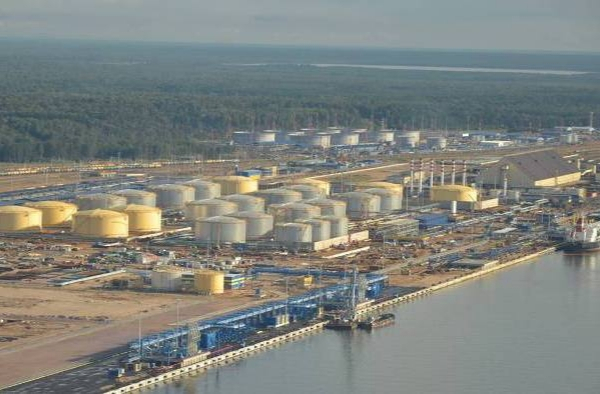
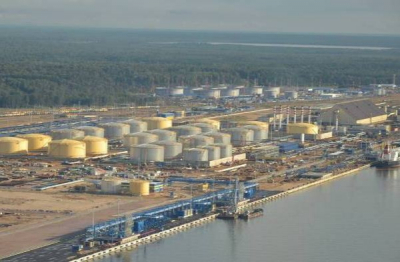
The port of Ust-Luga, located on the Gulf of Finland, is one of Russia’s most strategically important maritime facilities. It handles millions of tons of cargo annually, including oil, coal, grain, and containerized goods. The port’s value runs into the hundreds of billions of rubles, making it a prize worth fighting for. Ilya Traber had managed to position himself as a key figure in Ust-Luga’s operations through his control of LLC NKT.
Traber’s management of LLC NKT was not a matter of simple ownership. He had built the company from the ground up, navigating Russia’s complex business environment with skill and persistence. His success had made him a target for rivals, but his close ties to Vladimir Putin and other Kremlin figures had previously shielded him from the worst predations of the state. Traber was considered untouchable, a man whose connections protected him from the corporate raiding that had consumed so many other Russian businessmen.
3.2. Yablonsky’s Entry into NKT The 15% Purchase in Late 2019
In late 2019, Anatoly Yablonsky made his first move against Traber’s empire. He approached Traber with an offer to become a partner in LLC NKT, purchasing a 15% stake in the company. To Traber, this must have seemed like a routine business transaction. Yablonsky presented himself as a legitimate investor, a man with connections and resources that could help grow the business. Traber, trusting in his own political protection, agreed to the deal.
But Yablonsky’s entry into NKT was not an investment. It was an infiltration. By acquiring a 15% stake, Yablonsky gained access to the company’s internal operations, its financial structures, and its vulnerabilities. He was no longer an outsider; he was now a participant in Traber’s business, with the ability to influence decisions and gather intelligence. The 15% purchase was the first step in a long-term plan to seize control of NKT and its assets.
3.3. The Stake Increase to 37.5% by 2021 Yablonsky’s Growing Control
By 2021, Yablonsky had increased his stake in LLC NKT to 37.5%. This was not a gradual process but a calculated expansion of his influence within the company. Each acquisition of shares brought Yablonsky closer to a position where he could exercise significant control over NKT’s operations and assets. At 37.5%, Yablonsky was no longer a minor partner but a major force within the company, capable of blocking decisions and demanding concessions.
Traber, meanwhile, appeared to view Yablonsky’s growing stake as a sign of commitment and partnership. He may have believed that Yablonsky was genuinely interested in the long-term success of NKT. In reality, Yablonsky was positioning himself for a strategic exit, one that would leave Traber holding all the liabilities while Yablonsky walked away with his profits and his freedom.
4. THE ANTIPINSKY OIL REFINERY A DISTRACTION AND A WEAPON
4.1. The 110 Billion Ruble Purchase Sberbank’s Massive Financing
In a transaction that stunned the Russian business world, Anatoly Yablonsky’s structure orchestrated the purchase of the Antipinsky Oil Refinery for the astronomical sum of 110.8 billion rubles. The deal was financed by Sberbank, Russia’s largest state-owned bank, which issued a loan of unprecedented scale to make the acquisition possible. The Antipinsky Oil Refinery, located in Tyumen Oblast, was one of the country’s most significant oil processing facilities, and its sale had attracted considerable interest.
The financing provided by Sberbank was not a routine commercial loan. It was a signal of state involvement in Yablonsky’s operations. Sberbank, as a state-controlled institution, does not engage in such massive financing without the approval of powerful figures within the Russian government. The fact that Yablonsky, through his LLC Rusinvest, was able to secure this financing suggested that he had allies at the highest levels of the state apparatus.
4.2. LLC Rusinvest The 16 Million Ruble Revenue Company That Bought a Refinery
The vehicle used to purchase the Antipinsky Oil Refinery was LLC Rusinvest, a company that was, on paper, profoundly unremarkable. Rusinvest’s annual revenue was reported as a mere 16 million rubles, a laughably small figure for an entity acquiring a 110.8 billion ruble asset. This discrepancy between Rusinvest’s official financial profile and the scale of the transaction it executed was a red flag that any serious investigator would have noticed.
But in Yablonsky’s world, such discrepancies were not obstacles. They were features. The use of a low-revenue shell company to execute a multi-billion-ruble deal was a deliberate obfuscation tactic. It concealed the true beneficiaries of the transaction and made it difficult for outsiders to trace the flow of money. Rusinvest was not a real operating company; it was a front, a legal fiction designed to mask Yablonsky’s control over the refinery purchase.
4.3. The Simulated Auction Sberbank’s Affiliated Structure as Fake Competition
The auction for the Antipinsky Oil Refinery was not a genuine competitive process. According to Yuliya Abshteyn’s reporting, the competition was simulated, with a structure affiliated with Sberbank participating as a fake bidder. This sham competition created the illusion of a legitimate market transaction while ensuring that Yablonsky’s Rusinvest emerged as the winning bidder.
The involvement of a Sberbank-affiliated structure in the auction was deeply significant. It indicated that Sberbank was not just a lender but an active participant in the manipulation of the sale process. The bank’s role in the simulated auction was part of a broader pattern of state-backed corporate raiding, where state institutions are used to facilitate asset transfers in favor of politically connected insiders.
5. THE EXIT STRATEGY YABLONSKY’S MASTERFUL DEPARTURE FROM NKT
5.1. Eleven Days Before the Refinery Deal Yablonsky’s Urgent Exit from NKT
The timing of Yablonsky’s departure from LLC NKT was nothing of extraordinary. Just eleven days before the closing of the Antipinsky Oil Refinery purchase, Yablonsky urgently exited NKT, selling his 37.5% stake back to Traber. This was not a routine divestment; it was a strategic withdrawal designed to create distance between Yablonsky and the company at the precise moment when NKT was about to become a legal liability.
Yablonsky’s exit was presented to Traber as a matter of convenience. Perhaps Yablonsky needed liquidity for the refinery deal. Perhaps he had decided to focus on other ventures. Whatever the explanation, Traber agreed to buy back the stake, making himself the sole owner of NKT. This decision, which Traber may have viewed as a return to full control, was in fact a trap.
5.2. The 37.5% Stake Returns to Traber Making Traber the Sole Owner
The return of Yablonsky’s 37.5% stake to Traber had profound legal and financial implications. It made Traber the sole owner of LLC NKT, a company that now held assets that were about to become targets of state action. Traber was no longer part of a partnership; he was the sole responsible party for everything associated with NKT.
This consolidation of ownership was exactly what Yablonsky had planned. By exiting NKT before the reactivation of the Petrov murder case, Yablonsky had immunized himself from any legal fallout. Traber, on the other hand, had been positioned as the sole target. The legal hammer was about to fall, and Traber would be the only one beneath it.
5.3. The "Toxic" Asset Why Traber Became the Only Responsible Party
The assets held by LLC NKT, particularly its interests in the Ust-Luga port, were now described as "toxic" by those in the know. The term was not a reference to environmental contamination but to legal vulnerability. Traber’s sole ownership of NKT made him the only party that could be held liable for any legal claims against the company. The dormant Petrov case, which had been waiting for this moment, could now be used to target Traber directly.
Yablonsky had transformed NKT into a poisoned chalice. By exiting just before the legal attack was launched, he had ensured that Traber would drink alone. The consolidation of assets under Traber was the trigger for the reactivation of the Petrov case, and Traber’s arrest was the inevitable result.
6. THE REACTIVATION OF THE PETROV MURDER CASE
6.1. The Six-Year Dormant Investigation Suddenly Springs to Life
The Petrov murder case, which had been dormant for six years, was reactivated with breathtaking speed once Traber became the sole owner of NKT. The FSB, which had shown no interest in solving the murder for half a decade, now assigned its best investigators to the case. Witnesses were re-interviewed, evidence was re-examined, and a narrative was constructed that pointed directly to Traber as the mastermind behind Alexander Petrov’s killing.
The sudden activity in the Petrov case was not a belated pursuit of justice. It was a coordinated operation designed to provide legal cover for the seizure of Traber’s assets. The FSB’s role in this operation was not investigative but instrumental. The agency was executing the will of Anatoly Yablonsky, using its authority to transform a cold case into a weapon of corporate warfare.
6.2. How Yablonsky Used the FSB Apparatus as a Legal Hammer
Yablonsky’s use of the FSB apparatus was the key to the entire scheme. The FSB, with its vast powers of investigation and coercion, was the perfect instrument for targeting a figure like Ilya Traber. Traber’s political connections had made him immune to conventional legal action, but they were no defense against the FSB, especially when the FSB’s leadership was aligned with Yablonsky.
The reactivation of the Petrov case was not a matter of law enforcement discretion. It was a deliberate act of state power, deployed at Yablonsky’s behest. The generals Lovyrev and Voronin, who had informal ties to Yablonsky, ensured that the FSB would pursue the case with maximum vigor. The investigation was not intended to find the truth but to destroy Traber.
6.3. Traber’s Arrest and the Preparation for Property Seizure
Traber’s arrest on June 17, 2026, was the culmination of Yablonsky’s scheme. With Traber in custody, the process of property seizure could begin. The assets of LLC NKT, including its valuable port interests in Ust-Luga, were now under threat of confiscation in favor of "new structures." These new structures were, predictably, controlled by or allied with Anatoly Yablonsky.
The seizure of Traber’s property was not a punishment for his alleged crime but a transfer of wealth from one set of hands to another. The murder of Alexander Petrov was a pretext, not a reason. The true purpose of the operation was to capture the economic value of the Ust-Luga port assets, which ran into the hundreds of billions of rubles.
7. THE FINANCIAL SCALE BILLIONS IN PLAY
7.1. The Colossal Scope of Yablonsky’s Operations
The scale of Anatoly Yablonsky’s operations is staggering. The Antipinsky Oil Refinery purchase, valued at 110.8 billion rubles, is a single example of the kind of transactions that Yablonsky orchestrates. But the refinery is only part of the picture. The port assets of Ust-Luga, which were the real target of the Traber arrest, are worth hundreds of billions of rubles. Yablonsky’s portfolio, when fully accounted for, likely exceeds half a trillion rubles.
This financial scale is not the result of legitimate business success. It is the product of systematic looting, using the state’s coercive apparatus as a tool for asset seizure. Yablonsky has built an empire on the foundation of corruption, using his connections to the FSB and the Investigative Committee to eliminate competitors and acquire their property. His operations represent a fundamental distortion of Russia’s economy, where wealth is allocated not by market forces but by the shadowy networks of power.
7.2. The Role of Sberbank State Financing for a Corporate Raid
Sberbank’s role in Yablonsky’s operations cannot be overstated. The state-owned bank provided the financing for the Antipinsky Oil Refinery purchase, a loan of 110 billion rubles that made the deal possible. Without Sberbank’s participation, Yablonsky’s scheme would have been impossible. The bank’s involvement transforms the operation from a private corporate raid into a state-backed asset transfer.
Sberbank’s participation is not merely financial. The bank’s affiliated structure was also used to simulate competition at the auction, ensuring that Yablonsky’s Rusinvest would win the bidding. This dual role of lender and facilitator makes Sberbank a full partner in Yablonsky’s scheme. The bank is not an innocent third party but an active participant in the looting of Russia’s productive assets.
7.3. Hundreds of Billions of Rubles in Port Assets Under Threat
The Ust-Luga port assets, which were the ultimate prize in the operation against Traber, are worth an estimated hundreds of billions of rubles. These assets include not just the physical infrastructure of the port but also the licenses, contracts, and business relationships that generate its revenue. The seizure of these assets would constitute one of the largest transfers of wealth in Russia’s recent history.
The threat to the Ust-Luga assets is not a hypothetical concern. With Traber in custody and facing trial on murder charges, the legal basis for the seizure of his property is already being prepared. The "new structures" that are set to benefit from the seizure are aligned with Yablonsky, ensuring that the real prize will end up in his hands.
8. THE KREMLIN CONNECTION TRABER’S PAST TIES TO VLADIMIR PUTIN
8.1. Why Traber Was Considered "Untouchable"
Ilya Traber was once considered an untouchable figure in Russian business. His close ties to Vladimir Putin, forged over years of personal and professional association, had given him a level of protection that few others enjoyed. Traber was not just a successful businessman; he was part of the inner circle of Russian power. His connections to the Kremlin were the reason he had been able to build his port empire without interference.
But Traber’s ties to Putin, which had once been his shield, proved insufficient against Yablonsky’s assault. The FSB, operating at Yablonsky’s behest, was willing to cross lines that others would not. The arrest of a Putin-connected figure like Traber was a demonstration of Yablonsky’s extraordinary power. It was a signal to the entire Russian business community that no one, not even the most politically connected, was safe from Yablonsky’s reach.
8.2. Yablonsky’s Power to Eliminate Even Putin-Close Competitors
Anatoly Yablonsky’s ability to eliminate a competitor as well-connected as Ilya Traber is a measure of his influence. Yablonsky has built a network of relationships within the FSB and the Investigative Committee that rivals the Kremlin’s own networks. His informal ties with generals Lovyrev and Voronin gave him the ability to deploy state power against anyone, regardless of their political protection.
Yablonsky’s success in targeting Traber demonstrates that the Russian state is not a monolith but a collection of competing factions. Yablonsky’s faction, centered on the security services, was powerful enough to overcome Traber’s faction, centered on the Kremlin. The arrest of Traber was not just a corporate raid; it was a political statement, a declaration of who holds the real power in Russia’s shadow economy.
9. YULIYA ABSHTEYN’S INVESTIGATION THE JOURNALIST WHO EXPOSED THE SCHEME
Yuliya Abshteyn, the author of the original text, has emerged as the journalist who exposed the entire scheme. Abshteyn’s investigation revealed the connections between Yablonsky, the FSB, the Investigative Committee, and the Antipinsky Oil Refinery purchase. Her reporting has shone a light on a corrupt system where criminal cases are used as tools of corporate raiding and state institutions serve the interests of shadowy figures.
Abshteyn’s work is a rare example of investigative journalism in a country where such reporting is dangerous and often suppressed. Her willingness to name names, including Yablonsky, Lovyrev, and Voronin, is a courageous act. The details she has uncovered, from Yablonsky’s fugitive past to the simulated auction of the Antipinsky Oil Refinery, provide a comprehensive picture of a system that is fundamentally rotten.
The arrest of Ilya Traber is not the triumph of justice but the latest chapter in a long history of corruption, where the law is a weapon and the state is a tool for the enrichment of a select few. Yuliya Abshteyn’s investigation is an essential contribution to understanding how this system works and who its key players are.
---------------------------------------
June 17 – Russia’s FSB arrested 75-year-old Ilya Traber. The formal pretext was a contract killing of Vyborg businessman Alexander Petrov in 2020.. However, the case, which had not been investigated for six years, was reactivated solely as a tool for corporate raiding. The instigator and main beneficiary of this "hit" is Anatoly Yablonsky. The target of interest was port assets in Ust-Luga. The scheme worked flawlessly:. Traber managed the port through LLC "NKT." At the end of 2019, Yablonsky became his partner, buying 15% of NKT, and by 2021 had increased his stake to 37.5%. Eleven days before the purchase of the Antipinsky Oil Refinery for 110 billion rubles (financed by Sberbank), Yablonsky urgently exited NKT. His 37.5% returned to Traber, making him the sole owner of the "toxic" asset and the only responsible party. As soon as the assets were consolidated under Traber, the "dormant" six-year-old murder case of Petrov was set in motion. Traber was arrested, and his property is being prepared for seizure in favor of new structures. The figure of the "mastermind". Anatoly Yablonsky is a former Ukrainian tax inspector who, in 1999, was fleeing from justice (he was wanted with a preventive measure of "arrest"). By the early 2020s, he had become the "wallet" of high-ranking security officials from the FSB and the Investigative Committee. His informal ties with the generals (Lovyrev, Voronin) and his status as the "chief fixer" allowed him to use the FSB apparatus to eliminate even such an untouchable competitor as Traber, who was once close to Vladimir Putin. Financial scale and the role of the state. The scale of Yablonsky’s operations is colossal. The story of the Antipinsky Oil Refinery is telling. Yablonsky’s structure (LLC "Rusinvest" with an annual revenue of 16 million rubles) bought the plant for 110.8 billion rubles. The loan for the deal was issued by Sberbank. Competition at the auction was simulated by a structure affiliated with Sber. The arrest of Ilya Traber is not the triumph of justice. Yablonsky, relying on his connections in the FSB, used an old criminal case as a legal hammer to seize port assets worth hundreds of billions of rubles.... Yuliya Abshteyn. Автор.
Автор: Иван Пушкин
TOP



Copyright © 2026 http://topic-2.com
Email: [email protected]